Google SERP Tracking and AI Agents: What Does It Mean for the Future of SEO?
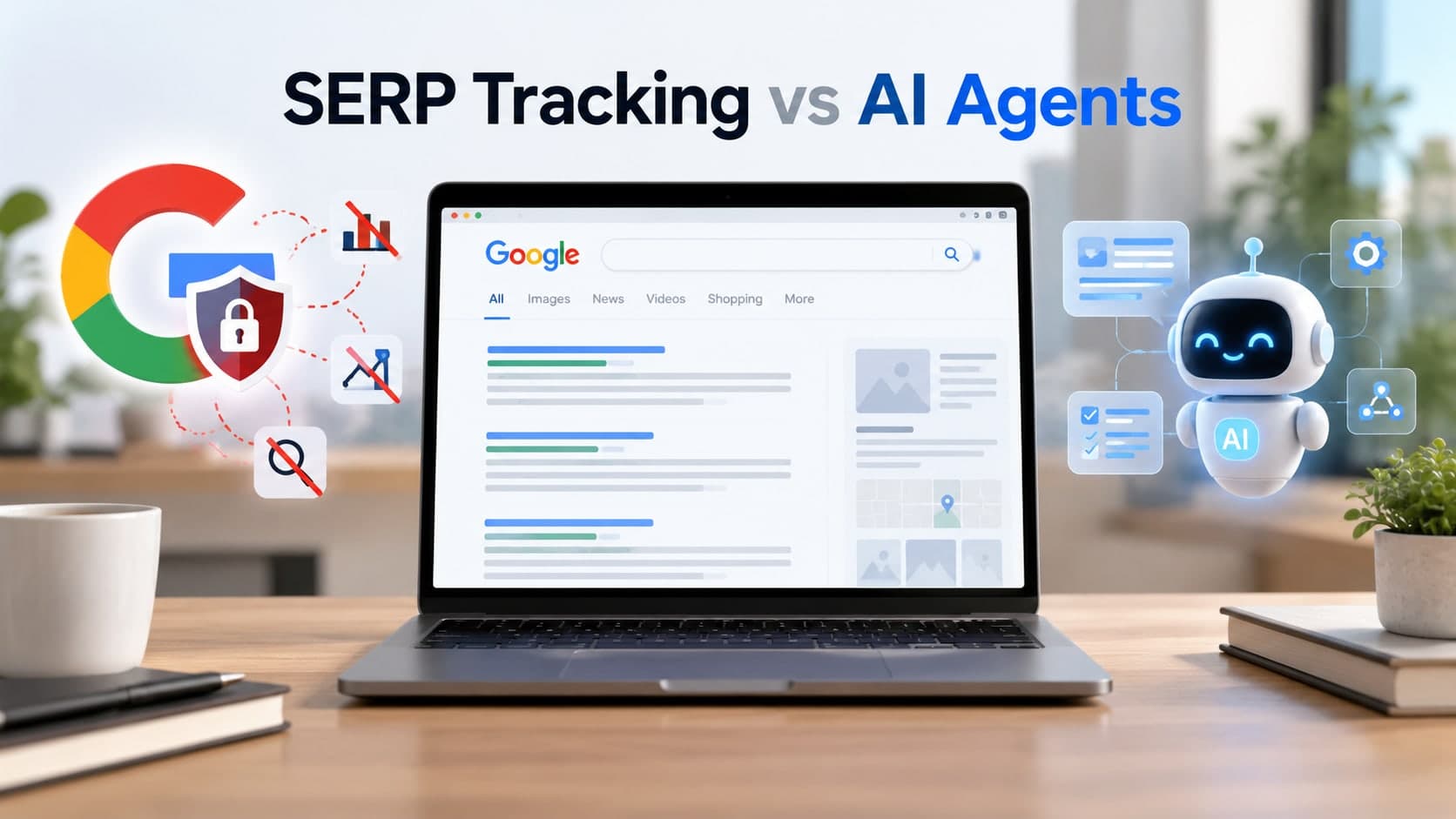
- Google is implementing stricter measures against automated access to its search results, making SERP tracking more challenging for businesses and SEO professionals.
- The rise of AI agents is contributing to increased automated search traffic, complicating the ability to distinguish between legitimate users and automated systems.
- SEO professionals are encouraged to focus on overall search performance and quality content rather than solely relying on keyword rankings due to these evolving challenges.
Google Search is changing, and artificial intelligence is becoming a major part of that change. Businesses and SEO professionals have relied on ranking tools for years to understand how their websites perform in search results. However, recent developments suggest that tracking Google rankings may become more challenging.
Google is taking stronger measures against automated access to its search results. At the same time, AI agents are generating more internet traffic, creating new challenges for search engines and SEO tools.
According to an October 5, 2026, report published by Search Engine Journal, the growing activity of AI agents may be one reason Google is becoming more aggressive in its approach to automated SERP tracking.
But what does this development mean for website owners, digital marketers, and businesses that depend on organic traffic?
Let's understand what's happening and how businesses can prepare.
What Is Google SERP Tracking?
SERP stands for Search Engine Results Page. It is the page Google displays when someone searches for a keyword or question.
SERP tracking is the process of monitoring where a website appears in Google's search results for particular keywords.
For example, imagine you own a software development company and want to rank for the keyword "software development company in Nepal".
A rank tracking tool can help you understand whether your website appears in the first, fifth, or twentieth position. SEO professionals use this information to monitor keyword performance, analyse competitors, identify ranking changes, and evaluate their optimisation efforts.
Many third-party ranking tools collect this information by automatically requesting Google's search results.
However, Google has been making automated access to those results more difficult.
Why Is Google Restricting SERP Tracking?
Google has long worked to control automated requests to its search engine.
Not every automated request comes from a real person. Some originate from ranking tools, data collection systems, bots, and AI applications. When thousands of automated systems repeatedly request search results, they can create additional pressure on Google's infrastructure.
There are several possible reasons behind Google's stronger restrictions.
1. Increasing Automated Search Traffic
AI tools are becoming more advanced and capable of performing online tasks independently.
These tools can search for information, compare websites, collect data, and answer questions without requiring users to visit every page.
As AI adoption increases, automated requests are becoming a much larger part of internet activity.
This creates challenges for platforms that need to distinguish legitimate users from automated systems.
2. Higher Processing Costs for AI Search
Traditional Google Search and AI-powered search do not always require the same amount of computing power.
A traditional search typically retrieves and ranks existing web pages. AI-powered search may involve additional queries, AI model processing, and the generation of summarised answers.
These extra processes require computing resources. If large numbers of automated systems continuously request AI-generated results, operating expenses and infrastructure demands may increase.
However, Google has not publicly confirmed that it specifically intends to lower AI search costs by reducing SERP tracking.
3. Protecting Search Data
Search results contain valuable information about rankings, websites, and user search behaviour.
Automated systems can collect large amounts of this information for competitive analysis or to develop other technologies.
Restricting automated access may also help Google limit unwanted data collection and protect its search systems.
How AI Agents Are Changing Search Engine Activity
AI agents are software systems that use artificial intelligence to complete tasks with limited human involvement.
Unlike a traditional chatbot that simply responds to a question, an AI agent may perform several actions to complete a request.
For example, someone might ask an AI assistant to identify the best software development companies.
The agent could search online, review different websites, compare services, and prepare recommendations.
All these activities may happen automatically. Cloudflare has reported that daily requests from AI agents across its network increased by more than 1,700% over a one-year period.
This illustrates how quickly automated internet activity is expanding.
The challenge is that some AI traffic serves real users, while other automated activity involves large-scale data collection.
Distinguishing between these activities is becoming increasingly important.
How Could Google's Restrictions Affect SEO Professionals?
SEO professionals depend on accurate data to understand whether their strategies are working.
If Google continues restricting automated search requests, some ranking tools may experience difficulties collecting reliable information.
This could result in delayed ranking updates, incomplete keyword reports, or differences between tools.
However, such a scenario does not mean SEO tracking will disappear.
Google Search Console still provides valuable information about impressions, clicks, average positions, and search queries. Businesses can also measure organic traffic, engagement, enquiries, and conversions through website analytics.
Instead of depending entirely on individual keyword positions, SEO professionals should focus on overall search performance.
At Lumino Technology, our approach to search visibility focuses on meaningful business outcomes rather than rankings alone.
Our SEO optimization services combine technical SEO, content optimization, keyword research, and website performance improvements to support sustainable organic growth.
Why Traditional SEO Alone Is No Longer Enough
Search behaviour is now expanding beyond traditional Google results.
People increasingly use AI-powered platforms to discover businesses, research products, compare services, and find answers.
This means businesses need to consider visibility across both traditional search engines and AI-powered search experiences.
For example, a potential customer might search Google for a software company or ask an AI assistant to recommend reliable development partners.
Businesses that provide clear, useful, and trustworthy information may have more opportunities to be discovered across these platforms.
This is why AI search optimisation is becoming an increasingly important part of digital marketing.
Lumino Technology explores this shift in our article, Your Business Is Invisible to AI Search. Lumino Technology Fixes That.
How Businesses Can Prepare for These SEO Changes
Although Google's approach to automated search access continues to evolve, businesses can take practical steps to protect their online visibility.
Focus on Quality Content
Create useful content that answers genuine customer questions. Avoid publishing articles simply to target large numbers of keywords. Instead, provide accurate explanations, relevant examples, and information that helps readers make decisions.
Improve Technical SEO
Make sure your website loads quickly, works properly on mobile devices, and allows search engine crawlers to access it.
Technical problems can prevent important pages from appearing in search results. Regular website audits can help identify these issues before they affect organic visibility.
Use Reliable Performance Data
Google Search Console and Google Analytics 4 can offer useful information about website performance. Track organic clicks, impressions, conversions, and user engagement alongside keyword rankings.
Optimize for AI Search
Organize content using clear headings, straightforward explanations, and descriptive page titles.
Keep business information accurate and consistent across your website.
Relevant structured data can also help search engines understand your content, although it does not guarantee visibility in AI-generated responses.
Build a Long-Term SEO Strategy
Avoid depending on temporary ranking techniques or a single reporting tool.
A sustainable strategy combines technical improvements, valuable content, authority building, and ongoing performance analysis.
Lumino Technology's digital marketing services help businesses connect these activities with measurable marketing goals.
What Is the Future of SERP Tracking?
SERP tracking is unlikely to disappear completely, but the methods used to collect and interpret ranking information may continue changing.
SEO platforms may need to develop more reliable ways to collect data while adapting to Google's restrictions.
At the same time, AI-powered search will make measuring online visibility more complex.
Businesses will need to understand not only where they rank but also how customers discover their brands across different search experiences.
The future of SEO will involve a broader combination of technical performance, content quality, brand credibility, and measurable business results.
Final Thoughts
Google's increasing restrictions on automated SERP tracking highlight an important change in the search industry.
As AI agents become more common, search engines face growing challenges involving automated traffic, infrastructure costs, and data access.
For businesses, the message is simple: SEO success should not depend entirely on keyword rankings.
Building a technically strong website, publishing valuable content, and improving visibility across traditional and AI-powered search platforms will remain important.
At Lumino Technology, we help businesses strengthen their digital presence through SEO, website development, and performance-focused digital marketing.